
How a Busy Locksmith Shop Runs Same-Day Dispatch
A field-tested look at how locksmith shops triage lockouts, route techs across a metro, stock the truck, and close jobs from a text.
By Oren, founder of BH Dispatch
Same-day is the whole business
In the home-service trades, dispatch is where the money is made or lost, and locksmithing is the sharp end of it. A lockout does not schedule itself for Tuesday at 2. Somebody is standing in a parking lot right now, and the shop that picks up, gives a real ETA, and actually shows up gets the job. Everything else, the rekeys, the lock installs, the safe work, has to flex around that reality.
The shops that handle this well are not working harder than everyone else. They have a system for turning a chaotic inbound stream into an orderly route. Here is how that system tends to look when it is running right.
Triage before you route
The first decision on every inbound call is not who to send. It is how fast this has to happen. Before a dispatcher touches the map, they sort the work into three buckets:
- Emergency now: a car lockout with a child or pet inside, a house lockout in bad weather, a business locked out at opening. These jump everything.
- Same-day, flexible: standard car and home lockouts, a broken key extraction, a lock that quit working. Get there today, but a two to three hour window is fine.
- Scheduled work: rekeys, new deadbolt installs, master key jobs, safe servicing. Booked to a window, and it is the shock absorber for the whole day.
Rekeys are your shock absorber
That third bucket is the secret to staying sane. Scheduled rekeys and installs are real revenue, but they are not time-critical to the minute. A good dispatcher books them into the soft spots of the day and treats them as movable. When three lockouts land in the same hour, the rekey that was pencilled for 1:30 slides to 3:00, the customer gets a heads-up text, and nobody is left stranded. Shops that treat every job as fixed in stone end up either turning away emergencies or blowing up their scheduled windows. The flexible middle is what absorbs the surprises.
Routing a metro without burning the day
Once a call is triaged, routing is a geography problem with a clock attached. The instinct is to send the nearest truck, but nearest on the map is not always soonest in reality. A tech who is fifteen minutes out but wrapping up a clean rekey may beat a tech who is ten minutes out but halfway into a stubborn extraction. Dispatch has to know not just where each truck is, but what state each job is in.
The shops that do this cleanly think in zones. They cluster scheduled work by quadrant so a truck is not deadheading across the whole service area between jobs, which keeps a bay of open capacity near wherever the next emergency lands. This is exactly how a Colorado Springs locksmith we follow handles a metro that stretches from the Air Force Academy down to Fountain: scheduled rekeys grouped by quadrant, so a surprise lockout on the north side never forces a forty-minute drive from the south. Real-time visibility into truck location and job status is what makes that possible, and it is the single biggest upgrade most shops can make to their dispatch.
The truck is your warehouse
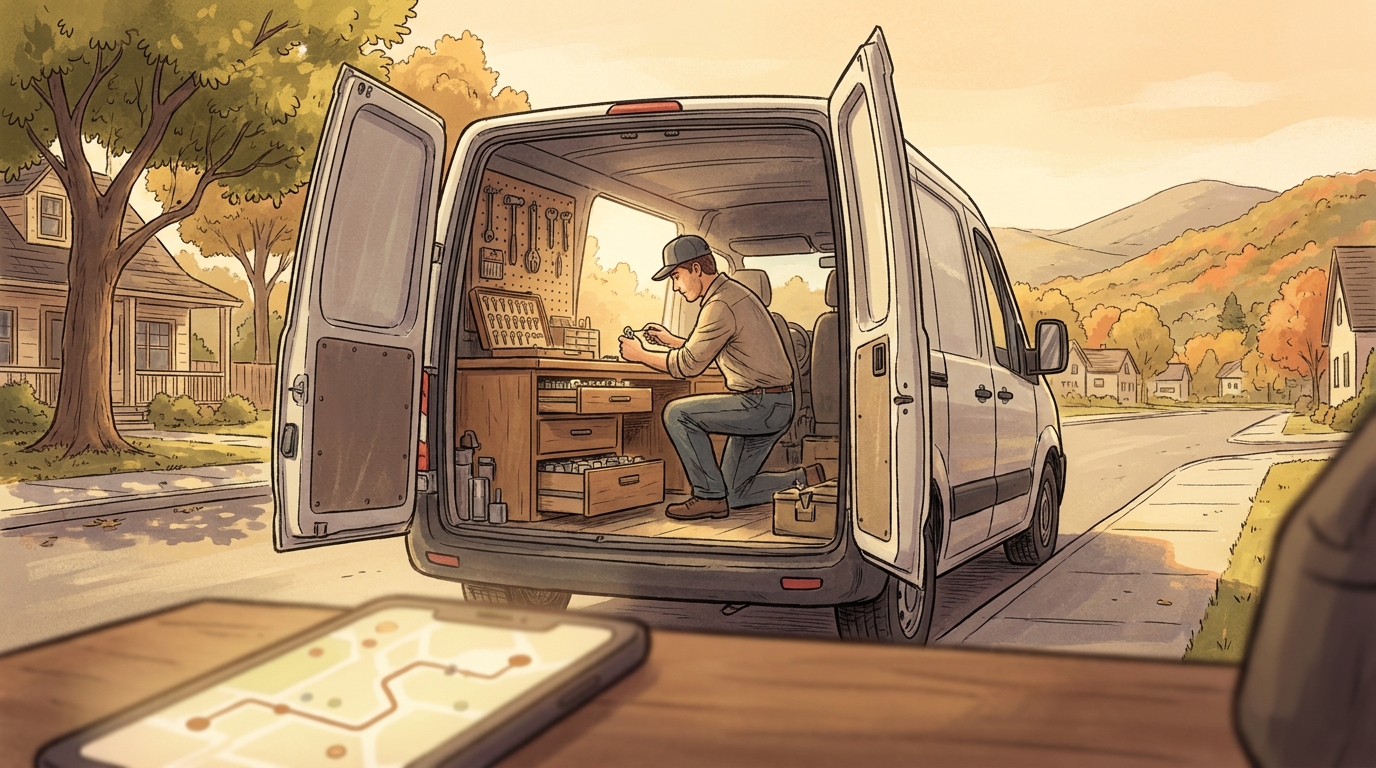
A same-day promise you cannot finish on the first visit is not really same-day. Nothing kills a shop's reputation faster than a tech who shows up, diagnoses the problem, and then says he has to order a part and come back. That is why the best-run locksmith operations treat the van as a rolling warehouse, stocked for the work they actually see in their market, not the work they see once a year.
A well-provisioned truck for a residential and automotive shop usually carries:
- Common car key blanks and transponder stock for the makes you see most
- Residential deadbolts and knobs in a couple of finishes, plus keyed-alike sets
- Rekey pinning kits, key gauges, and followers
- Broken-key extractors, plug spinners, and a working set of picks
- Automotive programming tools for the vehicles common in your area
- Basic commercial hardware: cylinders, strike plates, cam locks
Close the job from a text
The last mile of dispatch is the part most shops leave on the table. The tech finishes the work, and then the follow-through goes quiet. The shops that run tight close the loop over the same phone the customer already has in their hand.
That means a text with a live ETA when the truck is dispatched, an on-my-way message when the tech is close, and the receipt texted the moment the work is done so the customer settles up on the spot instead of waiting on a paper invoice. It is faster for the customer, it keeps collection at the curb where it belongs, and it creates a clean record of the job. A short, genuine follow-up asking how everything went is a natural next step for shops that want it. The point is that the job is not really closed until the customer has paid and knows the work is done, and text is the shortest path to both.
What tight dispatch actually buys you
None of this is exotic. It is triage, routing, stock, and follow-through, done consistently. But the shops that string all four together feel completely different to run. Emergencies get covered without wrecking the schedule, techs spend more of the day turning wrenches and less of it driving, and jobs close cleanly instead of dragging into next week.
You do not need to overhaul everything at once. Pick the weakest link, whether that is triage discipline, real-time truck visibility, or how you collect payment, and tighten it first. Same-day work rewards the shop that has a plan for the chaos before the phone rings.
FAQ
How do you decide which same-day job jumps the queue?
Triage by urgency, not by order of arrival. Anything with a safety angle, a child or pet locked in a car, a house lockout in dangerous weather, a business locked out at opening, goes to the front. Standard lockouts get a same-day window, and scheduled rekeys and installs flex to absorb the surprises.
What should always be on the truck?
Stock from your own job history, not a generic list. For most residential and automotive shops that means common key blanks and transponders, residential deadbolts and knobs in a couple of finishes, rekey pinning kits, extractors, and the automotive programming tools for the vehicles you see most. The goal is finishing the job on the first visit.
How many same-day calls can one tech realistically handle?
It depends far more on drive time than on wrench time. A tech clustered inside one zone can run several jobs in a day, while the same tech bouncing across a spread-out metro might manage half that. Grouping scheduled work by area is what protects capacity for emergencies.
Why close the job by text instead of a paper invoice?
Text closes the loop while the customer is still on site. The receipt lands in the same thread while they're standing next to the work — so you collect on the spot, not from an invoice mailed after the fact — a live ETA and on-my-way message cut down on no-shows and missed connections, and the whole exchange leaves a clean record of the job.
Run your dispatch on BH Dispatch
Calls, texts, and jobs in one place, with an AI that drafts replies and closes jobs. Free to start.